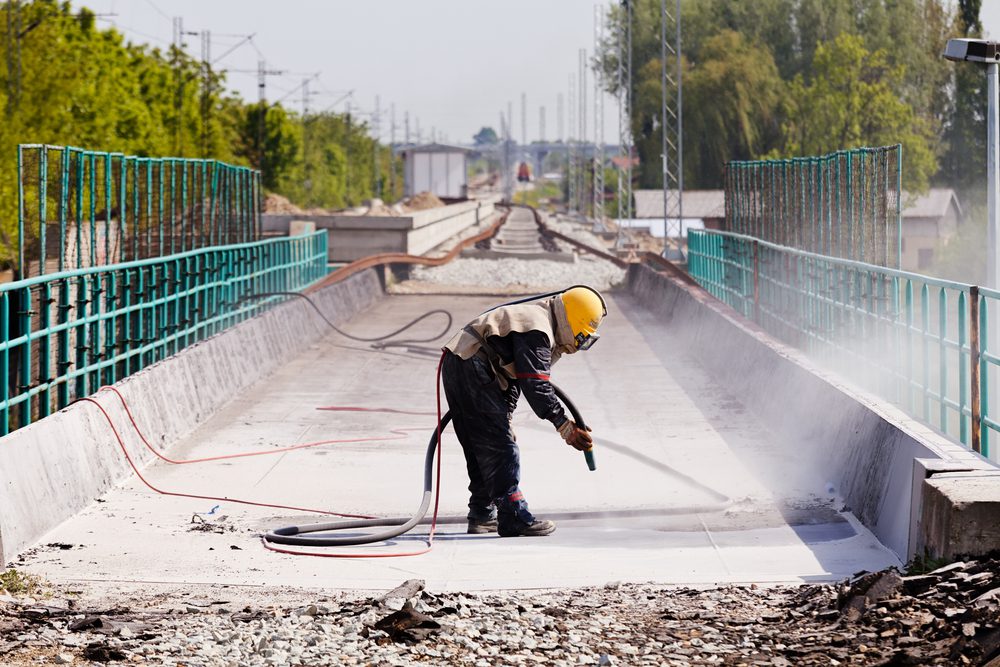
Business owners and industrial buyers often hear the terms abrasive blasting and sandblasting used interchangeably. While related, they are not the same. Sandblasting is actually one of the earliest forms of abrasive blasting, but it is now considered outdated and risky. This article explains the differences, the safety concerns around sand, and why professionals today rely on modern abrasive methods instead.
What Is Abrasive Blasting?
Abrasive blasting is a surface preparation method that uses pressurized air and a blasting medium to clean, strip, or profile a surface. It is a broad category that includes dozens of media types from crushed glass to garnet that are chosen based on the material being treated and the result desired. The goal is always the same: provide a clean, uniform surface ready for coating, painting, or restoration.
Learn more about our services to see how abrasive blasting is applied across different industries.
What Is Sandblasting and Why Was It Popular?
Sandblasting refers specifically to the use of silica sand as the blasting medium. It became widely popular during the 20th century because sand was cheap, easy to source, and effective for heavy-duty cleaning.
Common uses included removing rust from ship hulls, stripping paint from automobiles, and cleaning large industrial equipment. While effective, sandblasting soon revealed significant downsides that led the industry to move away from it.
Key Differences Between Abrasive and Sandblasting Methods
Media Types and Applications
Sand is just one option, modern abrasive blasting uses safer and more versatile media. Crushed glass, garnet, coal slag, baking soda, and even organic options like corn cob can be selected depending on the surface and finish required. For example, garnet is ideal for steel preparation, while soda blasting is gentle enough for historic brickwork.
Safety and Health Considerations
Silica dust produced by sandblasting poses severe respiratory risks, including silicosis and lung cancer. For this reason, dry sandblasting is now restricted or banned in many jurisdictions. Abrasive blasting with non-silica media, combined with proper PPE and air filtration, creates a much safer work environment in line with Alberta safety standards.
Surface Finish and Precision
Different abrasives create different surface profiles. Heavy-duty media provide a deep anchor pattern for industrial coatings, while softer media can gently clean wood, concrete, or antique metals without damage. This precision is one of the biggest advantages of modern abrasive blasting.
Why Sand Is No Longer the Industry Standard
Sand has largely been phased out for four key reasons
1) Health risks silica exposure is heavily regulated.
2) Inconsistent results sand grains vary in size and break down quickly.
3) Limited reuse sand cannot be recycled effectively compared to other media.
4) Liability companies avoid the higher health and safety risks. Today, safe, recyclable abrasives are the standard for both cost-effectiveness and compliance.
Check our FAQs for more on blasting safety.
Choosing the Right Abrasive for Your Project
Professional blasters consider several factors before starting a job: the surface material (metal, wood, concrete, etc.), the level of cleaning or profiling required, environmental conditions and dust control, and the desired outcome (paint adhesion, restoration, or gentle cleaning). This ensures each project gets the right balance of efficiency, safety, and finish quality.
You can view examples of our work in the gallery.
Trust Greystone Blasting for Modern, Safe Surface Prep
At Greystone Blasting, we provide mobile abrasive blasting services across Alberta. Our certified technicians use modern, eco-friendly media to deliver consistent results while protecting both workers and the environment. Whether it’s industrial equipment, commercial property, or a specialty restoration, we tailor the process to your project’s needs.
📞 Ready to get started?
Contact us today for a consultation.