Greystone Blasting supports projects across Alberta that rely on safe, accurate, and material-appropriate blasting methods. Choosing the right technique for each metal type prevents warping, over-profiling, premature coating failure, and costly rework. This guide explains how pressure settings, media selection, and blasting angles change between steel, aluminum, and other alloys to achieve the best finish for automotive, structural, and industrial applications.
Why Metal Type Changes Blasting Technique
Different metals react to abrasion, heat, impact force, and surface profiling in unique ways. Harder metals such as carbon steel tolerate higher pressures and aggressive media. Softer metals such as aluminum or brass require lower pressures, fine media, and controlled angles to avoid deformation. Understanding these differences allows technicians to remove rust, scale, and contaminants without damaging the underlying structure.
Blasting Techniques for Steel
Steel is the most forgiving material to blast because of its hardness and ability to handle aggressive surface preparation.
Recommended media
Steel typically pairs well with:
• Coal slag
• Garnet
• Steel grit
• Crushed glass
These media create a consistent profile for primers and industrial coatings.
Pressure settings
Steel handles higher PSI ranges, generally between 90 and 120 PSI depending on the coating system and surface condition.
Blasting angles
A direct 90 degree angle is acceptable for heavy rust or scale removal, while a 60 to 75 degree angle is ideal for profile uniformity.
Typical applications
• Structural steel
• Heavy equipment
• Tanks and industrial components
Greystone Blasting offers professional blasting services through their website at Greystone Blasting for steel preparation on commercial, industrial, and fabrication projects.
Blasting Techniques for Aluminum
Aluminum requires a much lighter touch because it can warp, pit, or over-profile easily.
Recommended media
Use non-aggressive, fine media:
• Crushed glass (fine)
• Walnut shell
• Plastic media
• Soda blasting for delicate applications
Pressure settings
Most aluminum blasting falls between 40 and 60 PSI. Higher ranges risk distortion.
Blasting angles
Maintain a 30 to 45 degree angle to reduce impact force and control heat buildup.
Typical applications
• Automotive panels
• Small equipment components
• Marine parts
Blasting Techniques for Stainless Steel and Specialty Metals
Stainless steel, brass, copper, magnesium, and other specialty metals each require tailored blasting methods to maintain their structural integrity and finish.
Stainless steel
• Use non-ferrous media such as garnet or crushed glass
• Avoid steel grit to prevent surface contamination
• Operate at moderate PSI to maintain cosmetic finish
Brass and copper
• Choose gentle media such as walnut shell or plastic
• Operate at 25 to 40 PSI
• Use shallow blasting angles for decorative surfaces
Magnesium
• Very soft and reactive
• Soda blasting or ultra-fine crushed glass
• Lowest possible PSI settings
Matching Techniques to Application Needs
Different environments demand different profiles and surface conditions.
Automotive
• Uniform, shallow profiles
• Fine media
• Lower PSI
• Prevent panel warping
Structural steel
• Higher profile for coating adhesion
• Aggressive media
• Higher PSI
Marine and corrosive environments
• Deep, consistent profile for high-build coatings
• Clean removal of salts, scale, and corrosion
• Garnet or steel grit depending on substrate
How Professionals Prevent Over-Profiling and Damage
A trained blasting technician adjusts every variable to match the metal, required profile, and coating system. This includes:
• Testing a small surface area before full blasting
• Monitoring temperature to avoid heat distortion
• Matching media hardness to substrate hardness
• Adjusting standoff distance
• Checking profile with surface measurement tools
These practices ensure durable adhesion, predictable coating performance, and smooth finishing.
Choosing a Qualified Blasting Provider
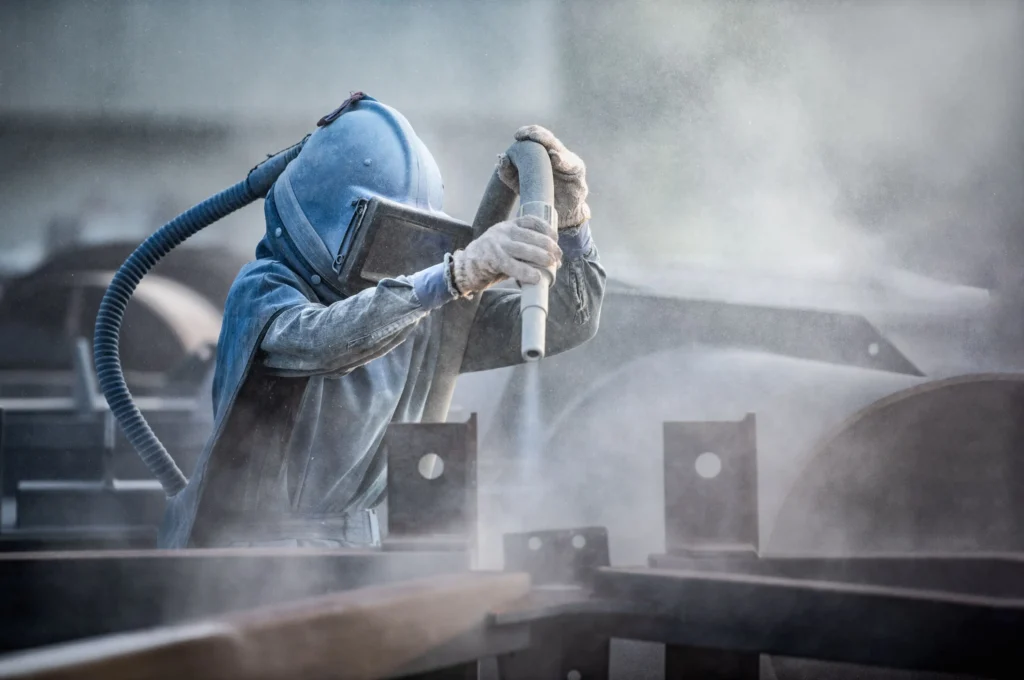
Blasting metal safely requires specialized knowledge, controlled equipment, and experience with varied alloys. A professional service provider such as Greystone Blasting brings material-specific expertise, detailed preparation standards, and Alberta industry experience. Their team helps determine the correct media, PSI, and technique for each project, and you can reach out using contact Greystone Blasting to schedule a consultation.